LE PRIX CLÉMENT JANEQUIN
European School Choir Competition
Poitiers • Futuroscope | June 3-7, 2027
Article 1 – Purpose and spirit of the Prize
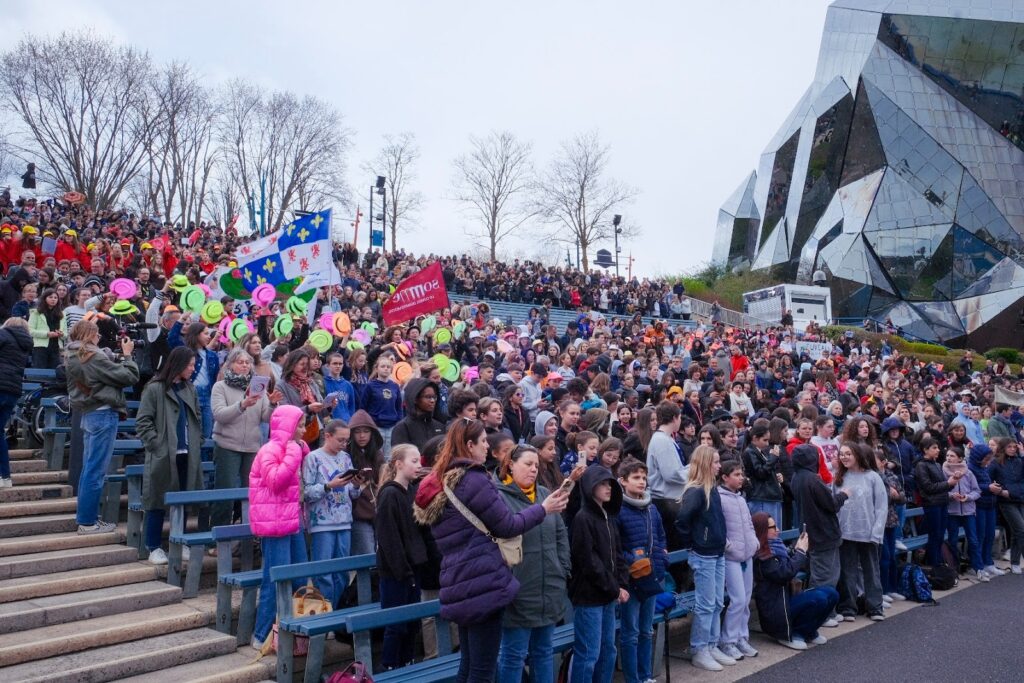
- The Clément Janequin Prize (hereinafter "the Prize") is a European competition for school choirs organized as part of the second edition of the Festival of Arts at School.
- The Prize aims to encourage artistic excellence, progress and self-improvement among young singers.
- It is based on a spirit of goodwill, sharing and cohesion, and not on a logic of competition between groups.
Article 2 – Organization, partners and scope
- The organizer of the Prize, its contact details as well as the institutional and artistic partners are specified in the call for applications and on the official materials of the Festival of Arts at School.
- The competition takes place in Poitiers for the semi-finals and at the Théâtre Auditorium de Poitiers (TAP) for the final.
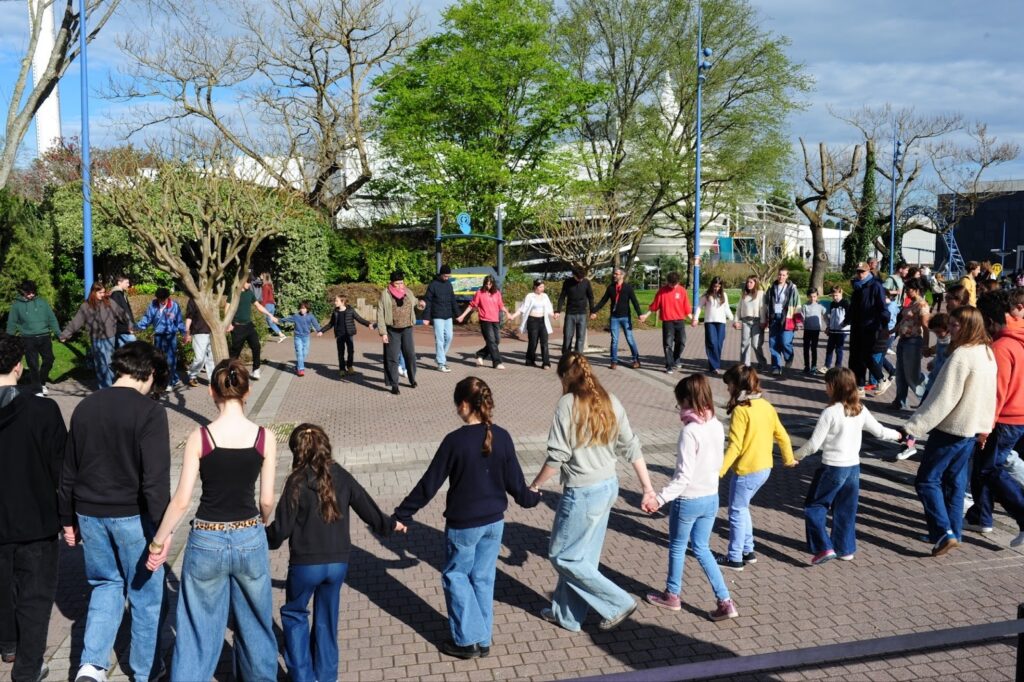
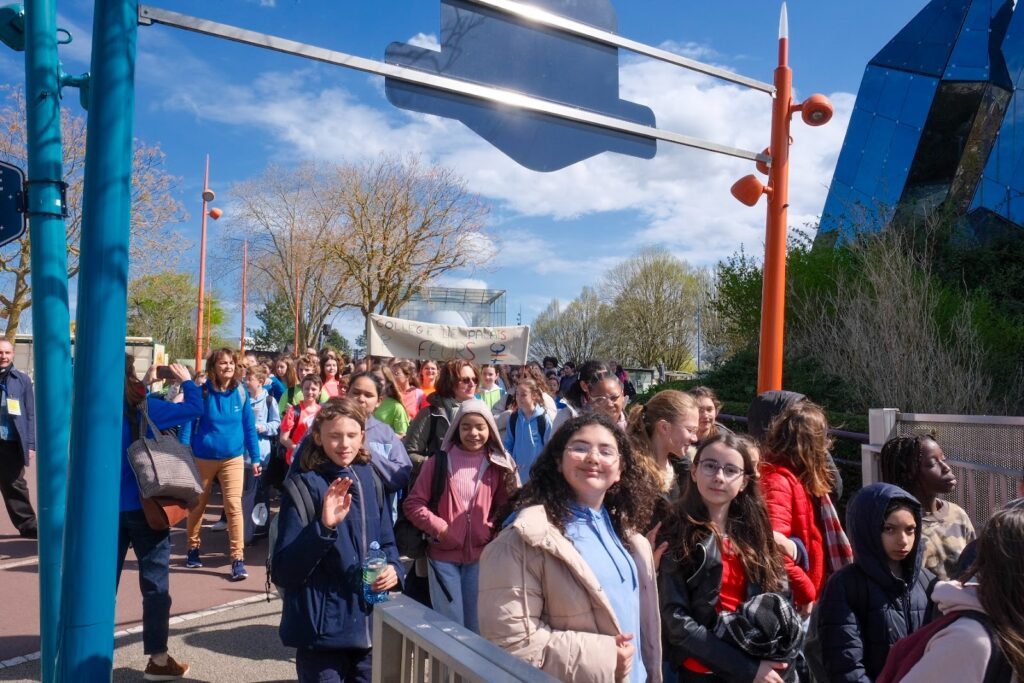
- A team-building day is being organised at Futuroscope Park.
- The artistic, technical and logistical teams of the Festival des Arts à l’École, mandated by the Fédération Nationale des Chorales Scolaires, are the only ones authorized to decide on matters of organization, planning, reception, security and access to the venues.
Article 3 – Calendar and general schedule of the competition
- The video pre-selection will take place in spring 2026, according to the terms specified in the call for applications.
- The in-person competition will take place from June 3rd to 7th, 2027.
- On Saturday afternoon, June 5, 2027, 24 choirs will perform in four separate locations, with six choirs per location.
- At the end of Saturday's performances, a finalist is chosen in each venue.
- On Sunday, June 6, 2027, the four finalist choirs will perform on the TAP stage as part of the final.
- On Monday, June 7, 2027, all participants take part in a team-building day at Futuroscope Park.
Article 4 – Eligibility requirements for choirs
- The competition is open to school choirs composed of students aged 10 to 18.
- A tolerance is granted for a maximum of 15% of the workforce, who may be aged up to 21 years at the time of the competition, subject to justification.
- Choirs must consist of a maximum of 6 to 60 singers, excluding the choir director.
- Each choir must be accompanied by responsible adults, in accordance with the regulations in force in the country of origin (parental authorizations, insurance, supervision of minors).
- The Prize is reserved for amateur ensembles with a school focus.
Article 5 – Application and selection
- Applications are submitted exclusively via the online form accessible on the official website of the Festival des Arts à l’École (www.fe-dae.fr).
- Le dossier de candidature comprend a minima :
- un formulaire d’identification du chœur (établissement, pays, coordonnées) ;
- une prévision d’effectif et de répartition par âges, à confirmer au plus tard en octobre 2026;
- un lien vers une vidéo conforme aux consignes précisées dans l’appel à candidatures ;
- une note artistique et pédagogique présentant le projet, les objectifs et le répertoire envisagé.
- Only complete applications received before the deadline will be considered.
- The selection committee reserves the right to request additional documents and decides on the final selection of the 24 choirs retained.
Article 6 – Directory and format of services
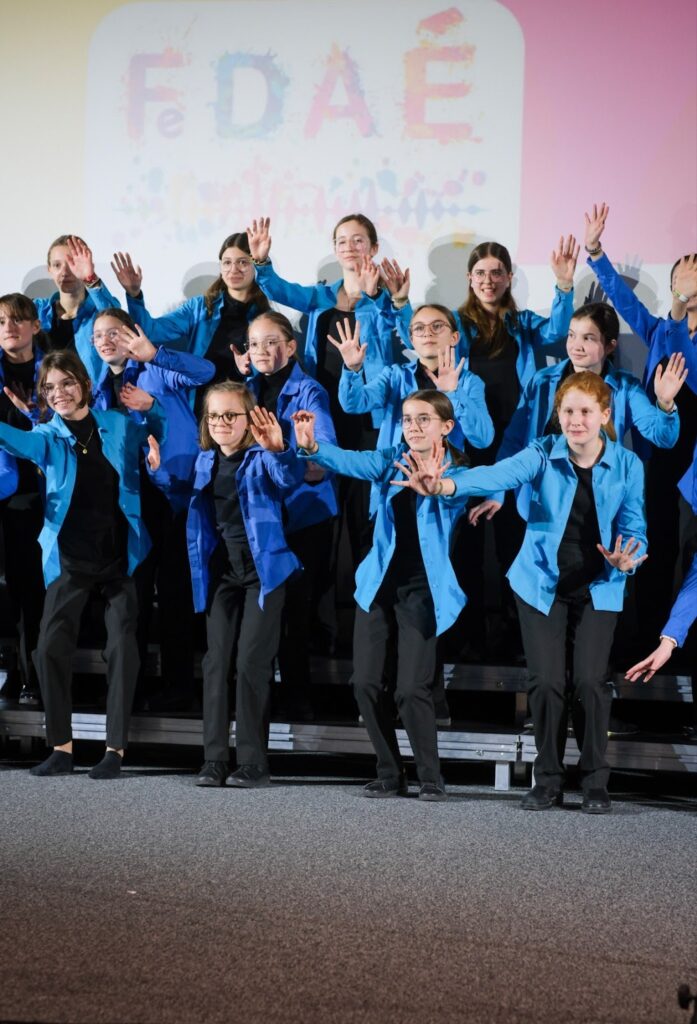
- On Saturday, June 5, 2027, the choirs will present a free program lasting a maximum of 18 to 20 minutes, actual musical time.
- On Sunday, June 6, 2027, the finalist choirs will present a free program lasting a maximum of 18 to 20 minutes, actual musical time.
- The number of pieces is unlimited within the limit of the authorized duration.
- Each choir guarantees the conformity of the works presented, particularly with regard to copyright, scores and authorizations.
Article 7 – Technical requirements and instruments
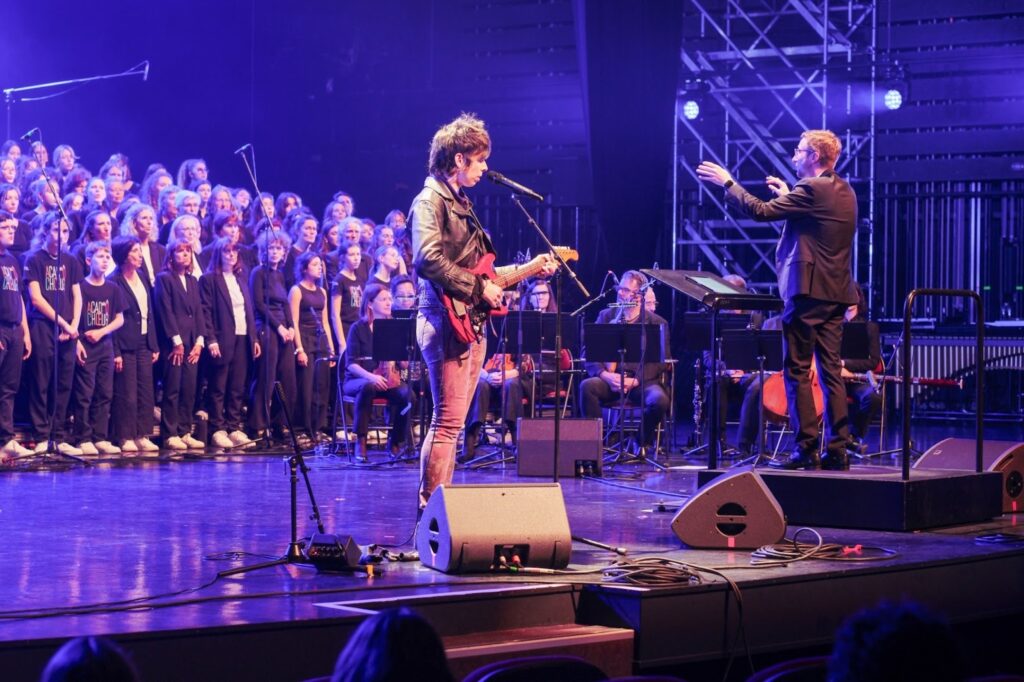
- Each room provides a piano, two music stands, platforms and the possibility of playing a soundtrack.
- No amplification of voices, whether of the choir or soloists, is permitted.
- Choirs can supplement the instrumentation provided with instruments brought by themselves (solo instruments, percussion, etc.).
- The installation and removal time of the additional instrumentation must not exceed three minutes.
- If a soundtrack is used, the sound level is set to respect acoustic balance and hearing safety; sound feedback may be permitted depending on the constraints of the venue.
- Technical requirements (stage plan, conducting, audio files, tests) must be submitted within the deadlines set by the organization.
Article 8 – Order of passage and punctuality
- The order of appearance is determined by the organizer, according to a principle of drawing lots or rotation, and communicated as soon as the schedule is validated.
- It cannot be modified, except in cases of force majeure.
- Any delay may result in a reduction of performance time, or even disqualification if the overall conduct of the competition is compromised.
Article 9 – Jury: composition, role and impartiality
- The jury is composed of internationally recognized experts in the field of choral singing.
- He evaluates the services independently.
- The jury's decisions are final and without appeal.
- Any direct or indirect contact aimed at influencing the jury is strictly prohibited.
Article 10 – Evaluation Criteria
Performances are evaluated according to the following criteria:
• vocal and musical quality;
• fidelity to scores and stylistic coherence;
• artistic choices and program construction;
• stage presentation;
• overall artistic impression.
Article 11 – Grading System and Diplomas
11.1 General Principles
- The evaluation of choirs is based on a numerical rating system in percentages, from 0 to 100%.
- It is based on a grid common to all members of the jury.
- The final score corresponds to the weighted average of the criteria defined below.
- This score determines the awarding of a level diploma: Bronze, Silver or Gold.
- The jury's decisions are final and without appeal.
11.2 Evaluation criteria and weighting
- Vocal and musical quality (accuracy, rhythmic placement, balance of sections, timbre, homogeneity, diction): 30%.
- Faithfulness to scores and stylistic consistency (respect for the writing, technical mastery, stylistic appropriateness): 20%.
- Artistic choices and program construction (relevance of the repertoire, diversity, dramaturgical coherence, suitability for the choir): 20%.
- Stage presentation (outfit, presence, posture, spatial arrangement, collective commitment): 15%.
- Overall artistic impression (overall coherence, artistic and emotional impact, choir identity): 15%.
11.3 Numerical scales by criterion
For each criterion, the jury assigns a score according to the following ranges:
- Vocal and Musical Quality
- Excellence: 27% to 30%
- Very High Standard: 24% to 26.9%
- Good Standard: 20% to 23.9%
- Developing Standard: below 20%
- Accuracy and Stylistic Consistency
- Excellence: 18% to 20%
- Very High Standard: 16% to 17.9%
- Good Standard: 13% to 15.9%
- Developing Standard: below 13%
- Artistic Choices and Programme Design
- Excellence: 18% to 20%
- Very High Standard: 16% to 17.9%
- Good Standard: 13% to 15.9%
- Developing Standard: below 13%
- Stage Presentation
- Excellence: 13.5% to 15%
- Very High Standard: 12% to 13.4%
- Good Standard: 10% to 11.9%
- Developing Standard: below 10%
- Overall Artistic Impression
- Excellence: 13.5% to 15%
- Very High Standard: 12% to 13.4%
- Good Standard: 10% to 11.9%
- Developing Standard: below 10%
11.4 Awarding of diplomas
- Gold Diploma: final score equal to or greater than 85%.
- Silver Diploma: final score between 70% and 84.9%.
- Bronze Diploma: final score between 55% and 69.9%.
- Each participating choir receives a diploma attesting to the level achieved.
11.5 Ranking and price
- The Clément Janequin Prize ranking is established exclusively among the finalist choirs.
- It is based on the overall score obtained during the final performance and on the artistic deliberation of the jury.
- Prizes are awarded without the possibility of ties, except in exceptional and justified cases decided by the jury.
11.6 Educational feedback
- With an educational and training focus, the jury may formulate a concise pedagogical assessment for the choir directors, highlighting the strengths of the performance and suggesting areas for improvement.
Article 12 – Final and prizes
- At the end of Saturday's performances, a finalist is chosen in each venue.
- The four finalists will compete in the final at the TAP on Sunday.
- The prizes are awarded as follows:
- 1st Prize: €5,000
- 2nd Prize: €2,500
- 3rd Prize: €1,500
- 4th Prize: €1,000
- Prizes are awarded without the possibility of ties, except in exceptional circumstances decided by the jury.
Article 13 – Accommodation, travel and cohesion
- Accommodation and catering are organised by the Agence Espace Europ.
- The singers are staying at the Futuroscope site, at the park hotel.
- The competition venues are located approximately 20 minutes by bus from the accommodation.
- Team-building activities (workshops, group singing, concerts, meals, park activities) are offered throughout the festival.
- Each delegation is responsible for the discipline of its members, their movements and compliance with safety instructions.
Article 14 – Sheet music, copyright and permissions
- Prior to the festival, the choirs send the works presented in PDF format by email.
- For the competition, the choirs bring five paper copies of each score.
- Choirs must be able to provide proof of the legality of their scores and the necessary authorizations.
- Any infraction is the sole responsibility of the choir concerned.
Article 15 – Audio and video recordings – Image rights
- Audio and video recordings may be made during the competition and the festival.
- By participating, delegations authorize the use of these images and recordings for communication and promotion purposes related to the event.
Article 16 – Insurance, liability and health
- Each delegation must have the necessary insurance coverage, particularly in terms of civil liability and health insurance.
- The organizer accepts no responsibility in case of loss or theft.
- The delegations are responsible for any damage caused by their members and undertake to respect the rules of the host venues.
Article 17 – Cancellation and Force Majeure
- The cancellation conditions are specified in the call for applications.
- In the event of force majeure, the organizer reserves the right to adapt or cancel all or part of the competition, without compensation beyond applicable legal obligations.
Article 18 – Personal Data
- The data collected is necessary for the organization of the competition and the festival.
- They are processed in accordance with current regulations.
- Participants have the right to access, rectify and delete their data.
Article 19 – Acceptance of competition rules
- Participation in the Clément Janequin Prize implies full and complete acceptance of these regulations as well as the instructions communicated by the organization.